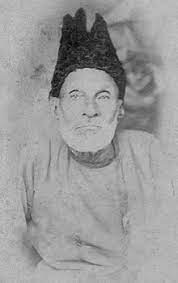
Mirza Asadullah Baig Khan (27 December 1797 – 15 February 1869) also known by the pen names of Ghalib and Asad was an Indian poet who wrote in Urdu and Persian and is renowned for his work Dabir-ul-Mulk, Najm-ud-Daula . His works describes the fall of the Mughal empire, the establishment of the British East India Company Rule and the Sepoy mutiny – the political scenario during his lifetime. Mirza Ghalib was born in Kala Mahal, Agra into a family of Mughals who moved to Samarkand (in modern-day Uzbekistan) after the downfall of the Seljuk kings. At the age of thirteen, Ghalib married Umrao Begum, daughter of Nawab Ilahi Bakhsh and settled at Delhi. He visited Kolkata to appeal to the East India Company to restore the full pension in lieu of his family estate annexed by the British. Ghalib had left for Kolkata on November 1826 and reached the ...
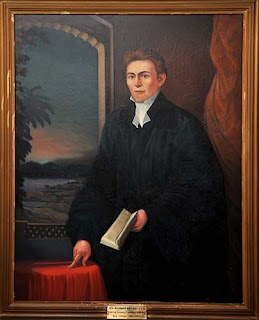
The foundation of Scottish Church College was laid by Dr. Alexander Duff, the first overseas missionary of the Church of Scotland to India . Initially known as the General Assembly's Institution, it was founded on the 13th July, 1830 . Rev. Alexander Duff opened his institution in Kamal Bose's (an Anglo Indian) house, upper Chitpur Road, Jorasanko. In 1836 the institution was moved to Gorachand Basak's house in Garanhata and in 1836 the present building was begun. In 1840 the Institution could be divided into School and College departments . Alexander Duff (1806-1878) was born in Scotland on 25th April, 1806. He had a brilliant career and arrived in Calcutta on 27th May, 1830 after two shipwrecks. In India, Dr. Duff had played a significant role in imparting western education through the medium of English. This further paved the way for the inculcation of western philosophy and western way of living within the Indian society. Dr. Duff developed a profound love for Ind...
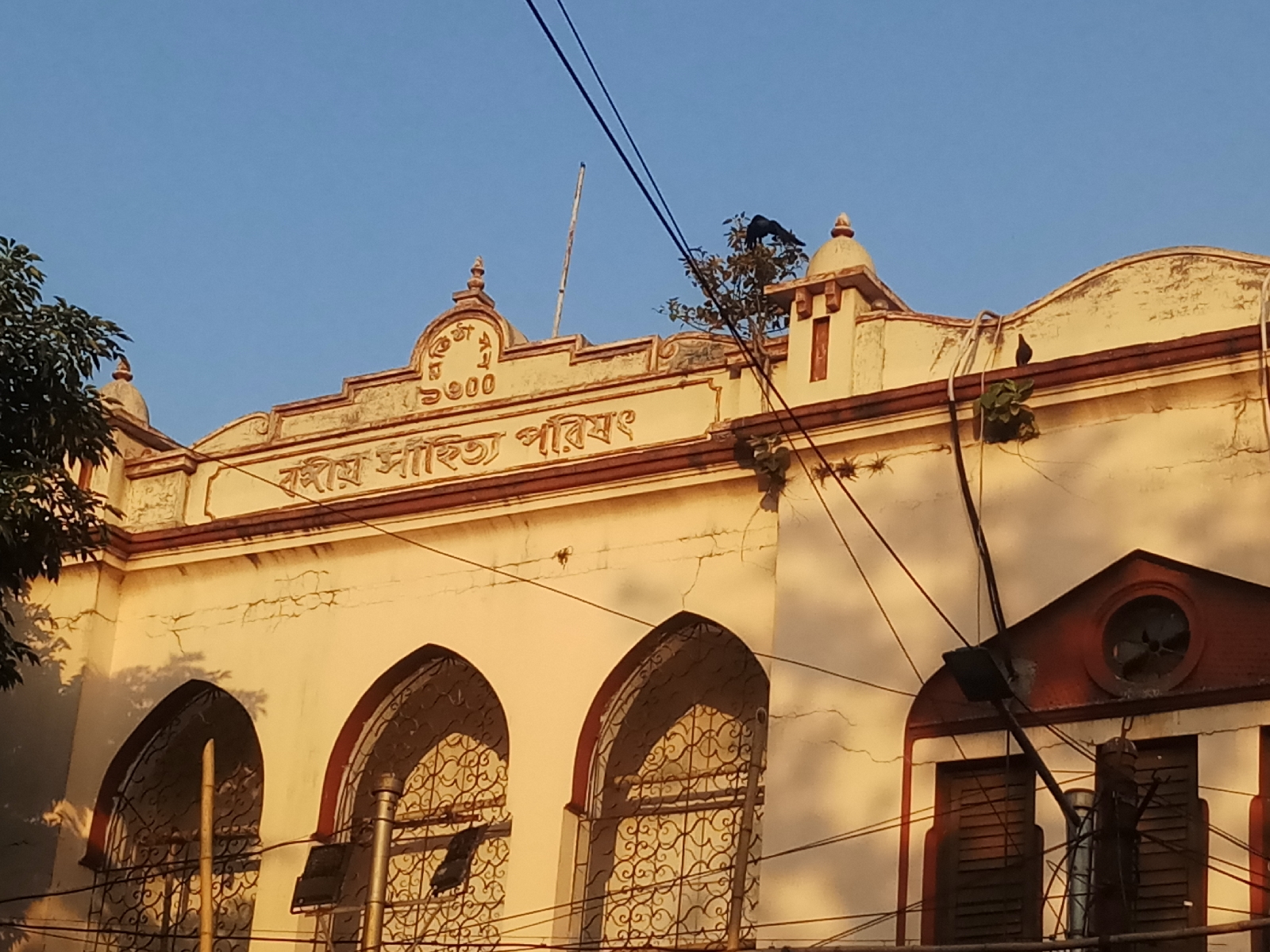
Bangiya Sahitya Parishat situated at 243, 1, Acharya Prafulla Chandra Road, Manicktala was established on 23rd July 1893 . Its objective was to study and develop the Bengali Language and Literature. Cultural, historical, archaeological, sociological and other scientific studies and researches with special reference to Bengal are also carried out. At the time of its establishment at the residence of Raja Benoy Krishna Dev of Sovabazar, it was named ‘Bengal Academy of Literature’. The Institution was renamed as Bangiya Sahitya Parishat in 1894. Romesh Chunder Dutt was the first president and Rabindranath Tagore and Nabinchandra Sen were the first vice presidents. The building has been declared as a Heritage property. Bangiya Sahitya Parishat Picture Gallery known as Bangiya Sahitya Parisat Chitrasala’ was founded in 1908 . Bangiya Sahitya Parishat Museum of Old Manuscripts, called ‘Bangiya Sahitya Parishat Puthisala’, was established in 1894 (1301 ...



Comments
Post a Comment