Posts

Showing posts from January, 2022

Khidderpore, Garden Reach and Kolkata Port Trust

Image
Khidderpore probabably derives its name from  Khidrpur  or  Khizarpur , Khizr/Khidr being the guardian saint of the seas to the fishing communities of Bengal. Others say that the area was named after  James Kyd , a 19th-century engineer who designed and supervised the building of the  lock gate  that connects the nearby port to the  Hooghly River .  H.E.A. Cotton   wrote in1909, "Kidderpore, which lies to the west of Alipore, is extensively populated principally by natives." In the early years of   British rule , Kolkata port was a river anchorage where sailing ships would load and unload in mid-stream. T he Kidderpore Bridge , the earliest stone-and-iron suspension bridge in India was constructed in 1826. he canal; called previously as Govindpore Creek and later as Tolly's  nullah  (excavated by Colonel Tolly) now runs into the Circular Canal, which again communicates with the Hooghly, forming the great inlet for country...

Sreerampore

Image
From 1755, Sreerampore was administered by Denmark under the name of Frederiksnagore . Their flourishing trade attracted merchants, weavers and workers along with Indian businessmen who built palatial houses. Soon it became famous as the most beautiful town in India.  In  1777  the administration of Serampore was transferred directly to the  Danish Crown  which was managed with great success by  Governor Ole Bie . He died in the year  1805  leaving a great Danish legacy in Serampore.  However owing to growing competitions with the East India Company, Denmark sold the town to the British in 1845.  The buildings of Sreerampore visited by people in search of architectural splendour can be broadly grouped into three categories:  Danish establishments:   Henry Martyn’s Pagoda  Aldeen House Serampore College Serampore Johnnagar Baptist Church Danish Cemetery Mission Cemetery Danish Government House (Serampore Court)- This was t...

Early Churches of Kolkata

Image
The Church of St Anne , built next to the old Fort William (inaugurated on 31 st Dec1699) during the early establishment of East India company in Kolkata and was the only available place of worship for the colonizers then.   It was consecrated on June 5, 1709 but was reduced to ruins by 1722 due to lack of maintenance and unstable political conditions. A lightening further damaged the structure in 1724 and was reduced to rubbles by the invading Moghul troops.  Old Fort William Church Later, the site of the demolished church and the adjoining plot were granted to Thomas Lyon in 1776 (during the Governorship of Warren Hastings) to construct buildings to accommodate the junior servants of the East India Company or the writers. Writers’ Building was the first three-storey building in Calcutta having undergone several extensions and renovations till date.  Robert Clive succeeded in defeating Siraj-ud-Daula and gained control over Calcutta in 1757. Subsequently East India Co...

Chatu Babu Latu Babu Rajbari

Image
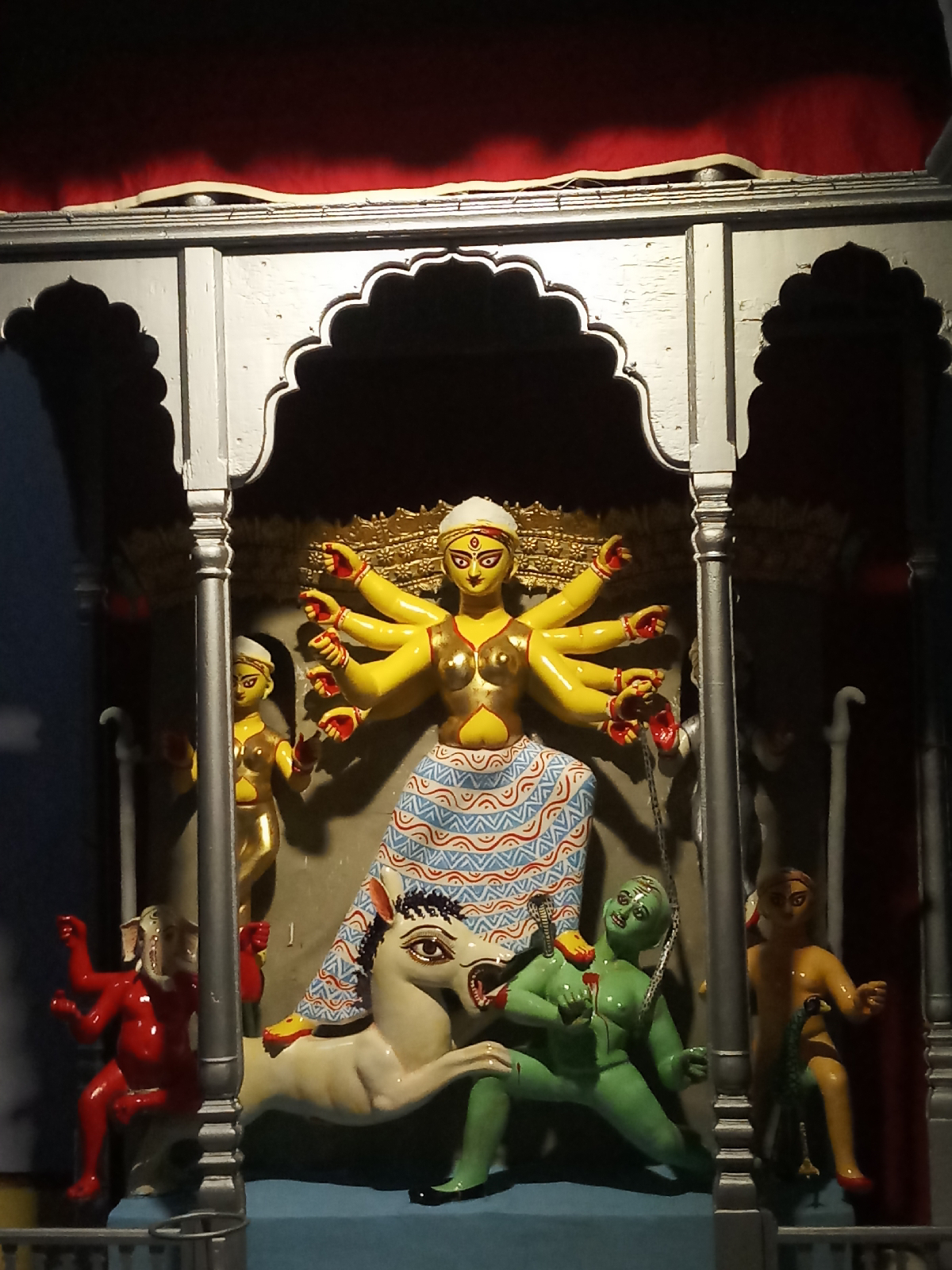
The architecture of Chatu Babu Latu Babu Rajbari bears a sense of magnanimity, sophistication, grandeur yet minimalism.   This 250 year old heritage property called Ramdulal nibash is located at the junction of Beadon Street and Hari Ghosh street opposite to the Chatu Babu Latu Babu bazaar .  The opulence of bonedi bari Durga pujo is witnessed by inhabitants and tourists of Kolkata. The puja traces its roots to more than 2 centuries back and was started by Ramdulal Dey (Sarkar) though the exact date is unknown. Later his sons Chhatu Babu and Latu Babu continued the legacy.  The Deity of 2022 Durga dalan Architectural wonder  Picture Picture being restored Ramdulal Dey (Sarkar)  was born to a poor daily wage earner and was orphaned at a young age. Madan Mohan Dutta a wealthy Bengali merchant of Hatkhola area took his responsibility as he was the grandson of their domestic help. By sheer w...